Water Management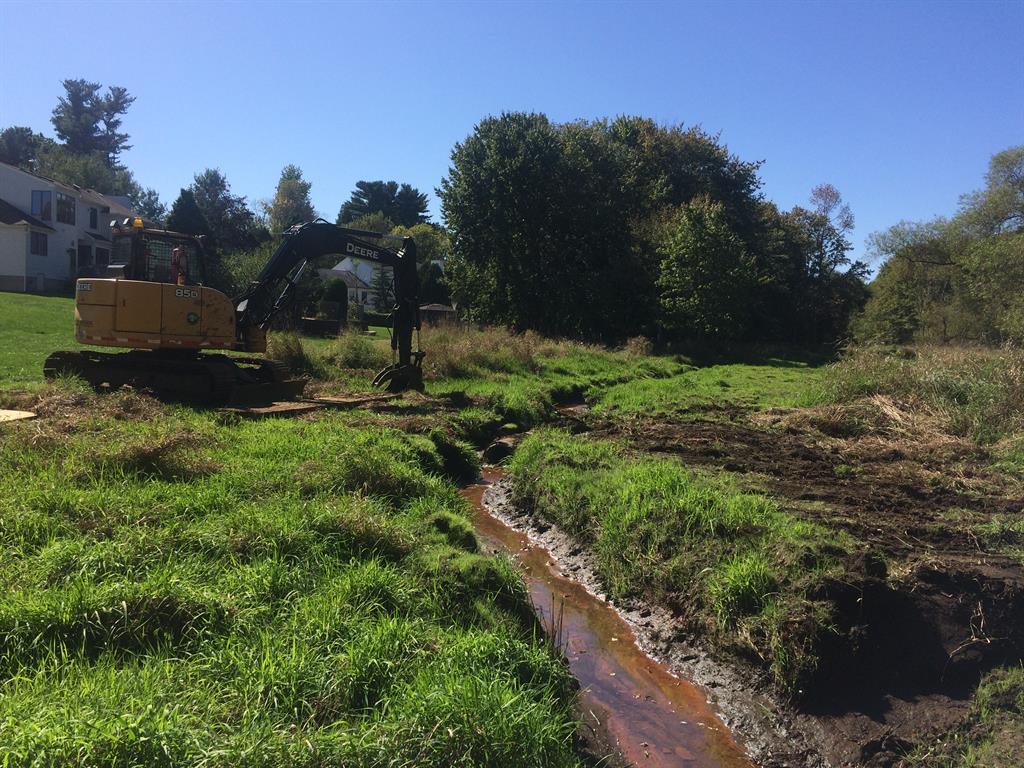
As part of its mosquito control program, the County has adopted a strategy to reduce mosquito-breeding habitat by physically managing surface water. This can range from removing log jams, blocks and sediment from a waterway, eliminating stagnant water (e.x., pools) and flooding to excavating accumulated sediment from a lake, thereby improving the habitat for fish and other natural mosquito predators.
A project may begin as a request for service from a municipal official or private resident. Staff inspects the site to see if there is a legitimate drainage concern and associated mosquito breeding. If Mosquito Control can accomplish proper drainage, we will accept the project and write to the municipality. Mosquito Control does not re-grade property to eliminate standing water.
Mosquito Control has a countywide NJDEP Freshwater Wetlands and Flood Hazard Area permits that allow us to maintain streams, man-made watercourses and stormwater management facilities. Mosquito Control has a blanket permit for performing drainage work in tidal wetlands from the Army Corps of Engineers. All permits still require this division to submit a detailed notification to these agencies for every project involving the removal of sediment. Mosquito Control requires every property owner adjacent to the waterway involved to sign a Right-of-Entry form allowing personnel and equipment access.
More information regarding the process involved with a Mosquito Control Division's Water Management project,
click here.
For more information about NJDEP stream cleaning guidelines,
click here.
Actual implementation of a project is conducted by County Highway Division and/or Shade Tree Division personnel and equipment with oversight by the Mosquito Control Division. Low ground pressure equipment allows work in relatively wet environments. For all our water management projects, this County follows "Best Management Practices for Mosquito Control and Freshwater Wetlands Management" prepared by NJDEP.
Page Last Updated: 2/1/2022 11:15:00 AM